The 2026 Formula 1 Australian Grand Prix at Albert Park Circuit introduced several changes around the circuit, including the brand-new Engineers Australia Stand. As a motorsport photographer attending the event, I spent the race weekend shooting from the very last row of this new grandstand, and overall, it turned out to be a highly interesting — though sometimes challenging — location for Formula 1 photography.
This article shares my real-world shooting experience, including the advantages, disadvantages, camera techniques, and what photographers should realistically expect from this stand during the Australian Grand Prix.
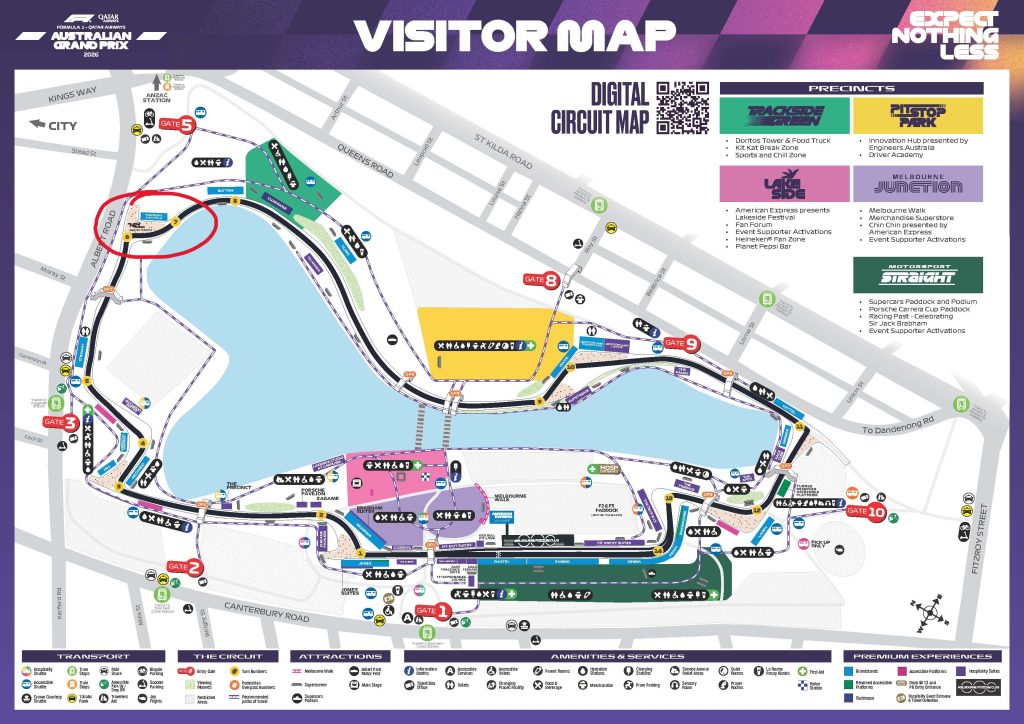
Location and View
The Engineers Australia Stand overlooks the section between Turn 6 and Turn 7, a fast and technical sequence where Formula 1 cars rapidly change direction through consecutive corners.
From a spectator perspective, the view is excellent. However, from a photography perspective, the stand becomes particularly interesting if you are seated in the highest rows.
One of the biggest advantages of sitting in the final row is that your shooting angle can clearly rise above the circuit fencing. Anyone who has photographed Formula 1 before knows how difficult fencing can be at modern circuits, especially at street or semi-street venues like Albert Park. Many grandstands suffer from heavy obstruction, forcing photographers into awkward compositions or requiring very precise lens positioning through small fence openings.
At the Engineers Australia Stand, the final-row elevation significantly reduces this issue.
This creates a much cleaner shooting experience and allows photographers to focus more on composition and timing rather than constantly fighting the fencing.
Why This Stand Is Excellent for Motorsport Photography
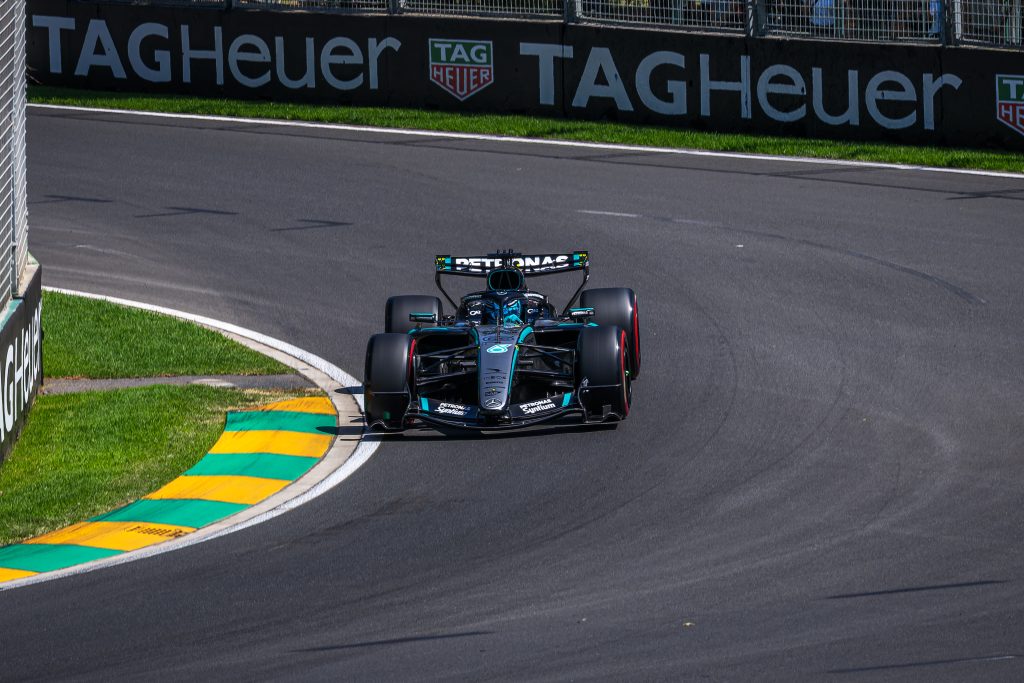
The shooting angles from this grandstand are surprisingly versatile.
Because the cars approach and rotate through two consecutive corners, photographers can capture:
- front-facing shots,
- front three-quarter angles,
- side-profile compositions,
- and cornering action with visible steering input.
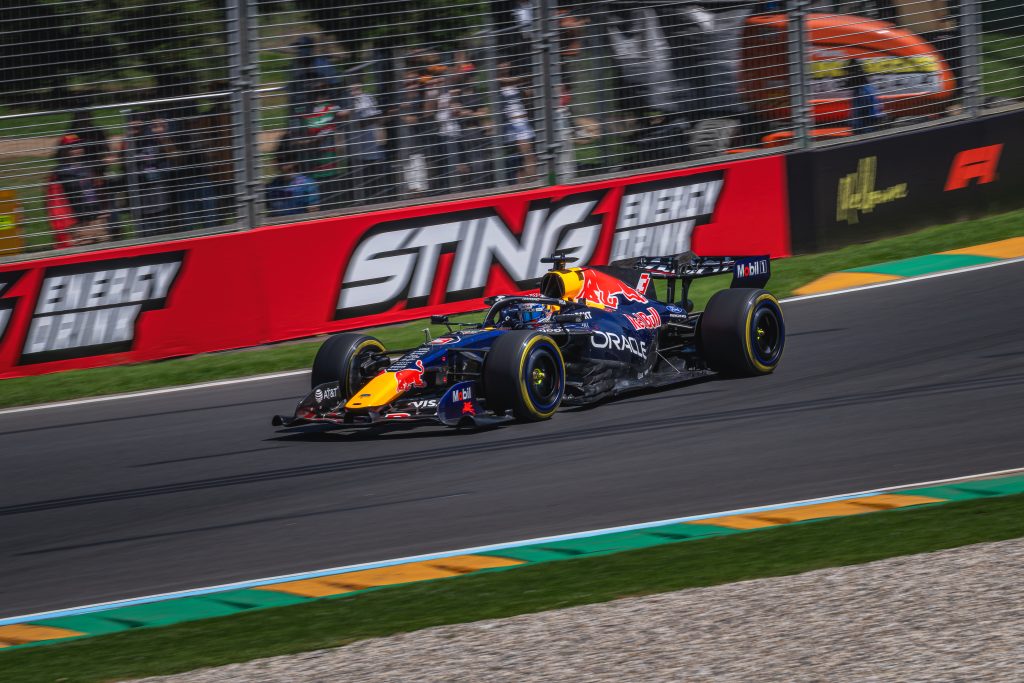
Compared to grandstands positioned along straights, the Engineers Australia Stand produces images with far more dynamic movement and racing character.
One aspect I particularly liked was the ability to photograph both the aggressive approach into Turn 6 and the transition toward Turn 7 within the same shooting sequence. This creates a wide variety of compositions without needing to relocate around the circuit.
For photographers using telephoto lenses such as a 70–200mm, this location works especially well.
The Biggest Challenge – Panning Through Consecutive Corners
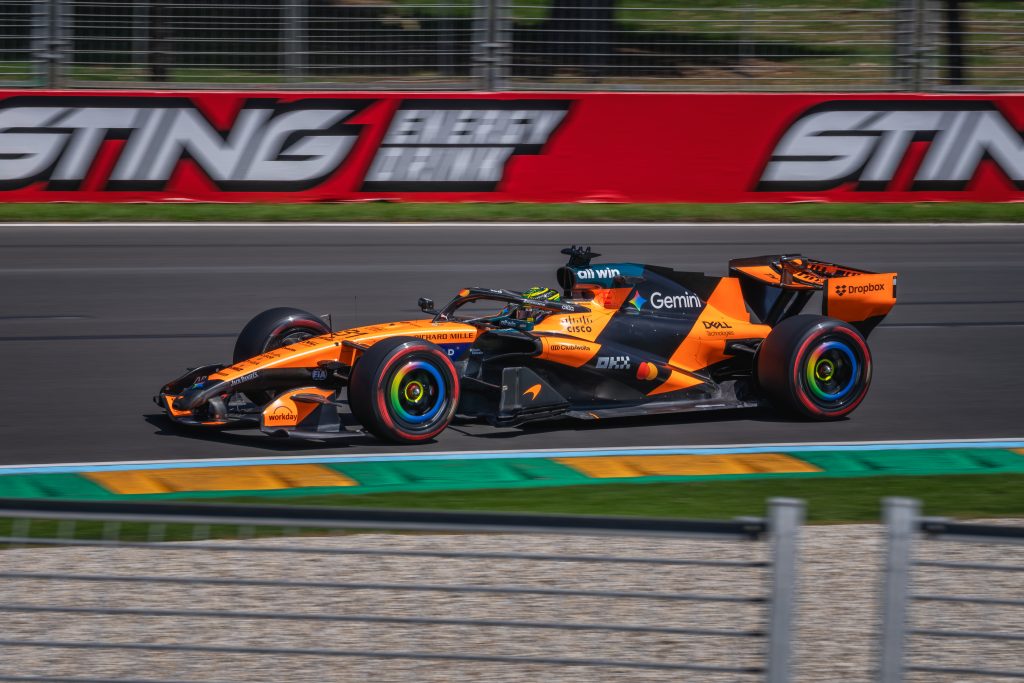
Despite the excellent visibility, this is not an easy grandstand for panning photography.
The primary issue comes from the geometry of the track itself.
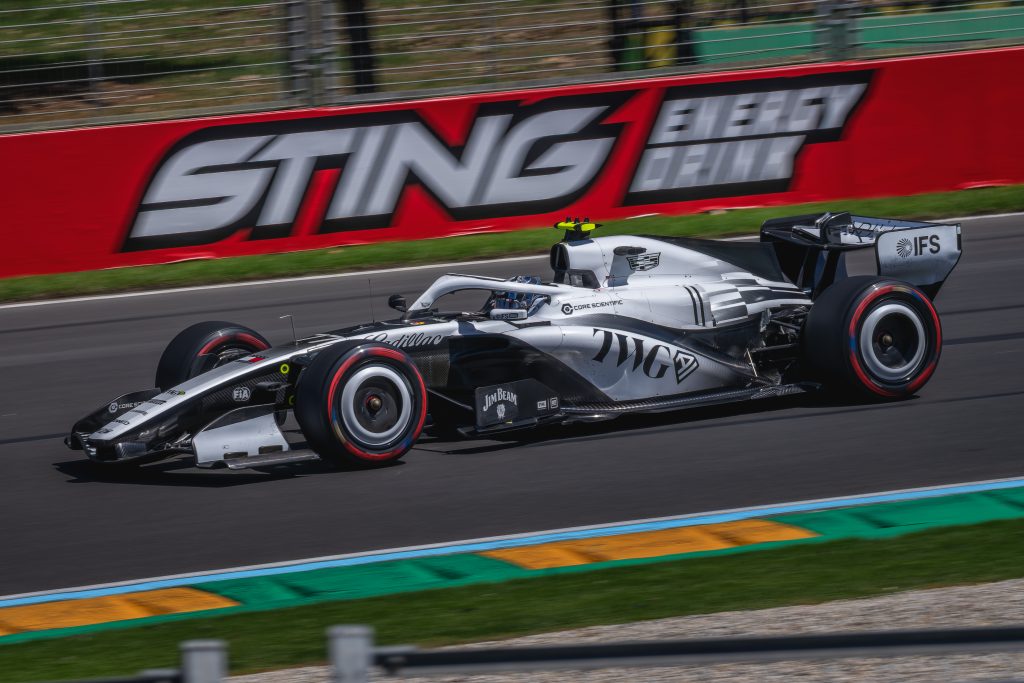
At many circuits, successful panning shots are easier because the cars move laterally across your field of view in a relatively straight line. At Turn 6 and Turn 7, however, the cars are constantly rotating and changing direction as they transition through the corner sequence.
This creates a situation where:
- one part of the car may appear perfectly sharp,
- while another part becomes soft or motion blurred,
even when autofocus is working correctly.
For example, the cockpit and front wing may look sharp while the rear section of the car appears slightly blurred due to the rotational movement of the vehicle during the pan.
As a result, this location requires:
- smoother tracking technique,
- more stable body movement,
- and more precise timing compared to shooting on straights.
The keeper rate for slow shutter speed panning shots is noticeably lower here than at simpler sections of the circuit.
For photographers attempting aggressive panning speeds such as 1/80s or slower, expect a significant learning curve.
Afternoon Lighting and Backlighting Problems
Another major factor photographers should consider is lighting direction.
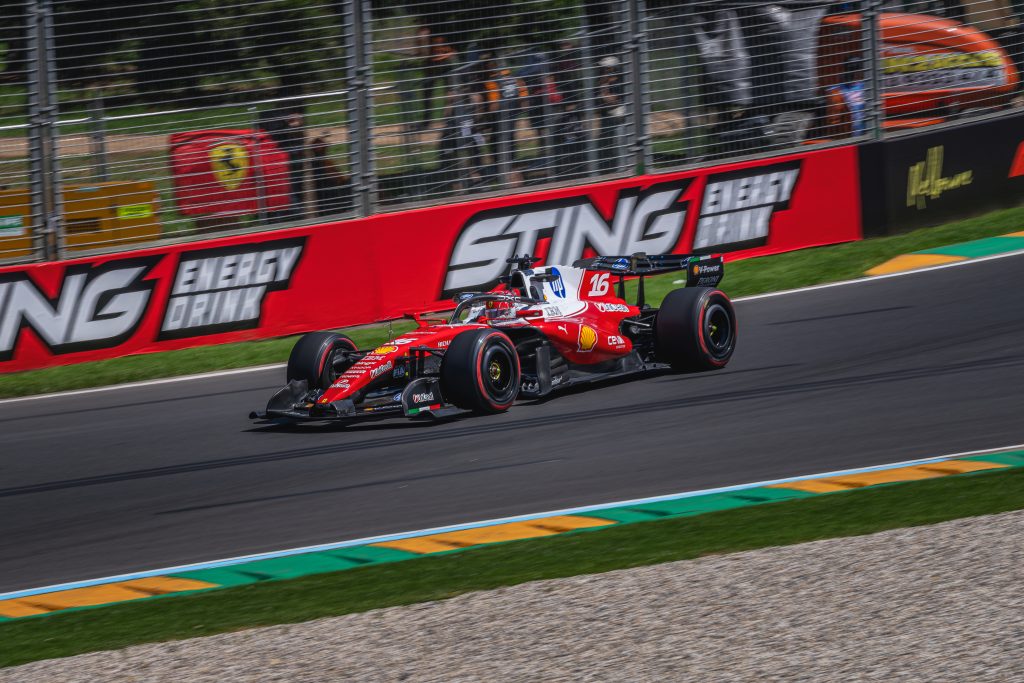
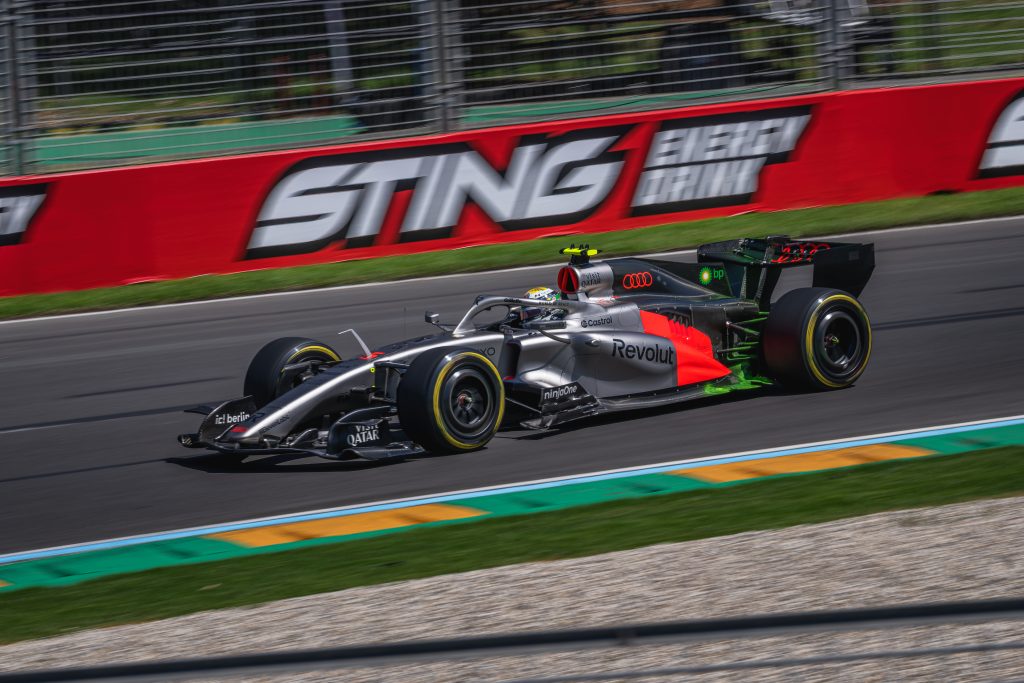
During sunny afternoon sessions, the Engineers Australia Stand can become partially backlit depending on the sun angle. While not completely unusable, the lighting conditions are definitely less than ideal for photography during bright and clear weather.
This introduces several problems:
- strong highlights on reflective bodywork,
- reduced shadow detail,
- inconsistent exposure across different car angles,
- and increased difficulty when editing RAW files afterward.
Because Formula 1 cars feature highly reflective surfaces and sponsor decals, harsh afternoon sunlight can easily create blown highlights, especially on front wings, sidepods, and helmets.
The issue becomes even more noticeable while panning. Since the cars are already rotating through the corner sequence, changing light angles can make exposure consistency much harder to maintain.
Under these conditions, photographers may benefit from:
- slightly underexposing images to protect highlights,
- using Auto ISO with exposure compensation,
- continuously checking histograms during sessions,
- and shooting in RAW for maximum recovery flexibility.
Interestingly, overcast weather dramatically improves this location. Under cloudy conditions, the stand becomes much more balanced for photography, with softer light and significantly easier exposure control.
Recommended Camera Settings
For Sharp Action Shots
- Shutter Speed: 1/1000s – 1/2000s
- AF Mode: Continuous AF (AF-C / Servo AF)
- Drive Mode: High-Speed Continuous
- Lens Range: 70–200mm is ideal
For Panning Shots
- Shutter Speed: 1/80s – 1/200s
- Start tracking before the car enters the frame
- Continue the pan after pressing the shutter
- Rotate using your upper body instead of only wrist movement
Because the cars are cornering rather than moving straight across the frame, slightly faster shutter speeds than typical motorsport panning may improve consistency.
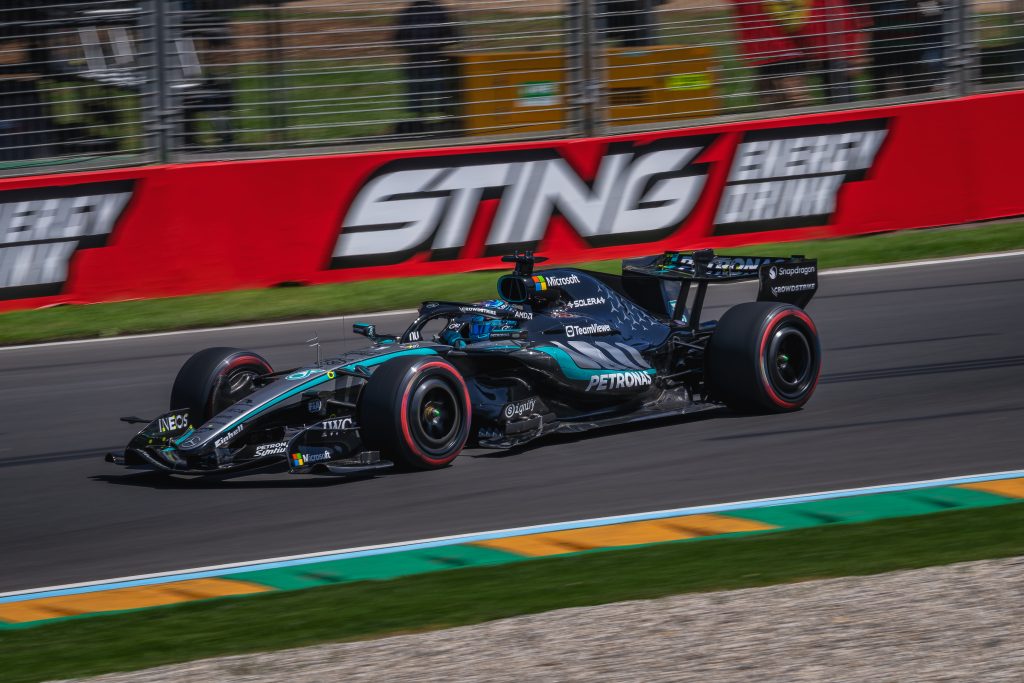
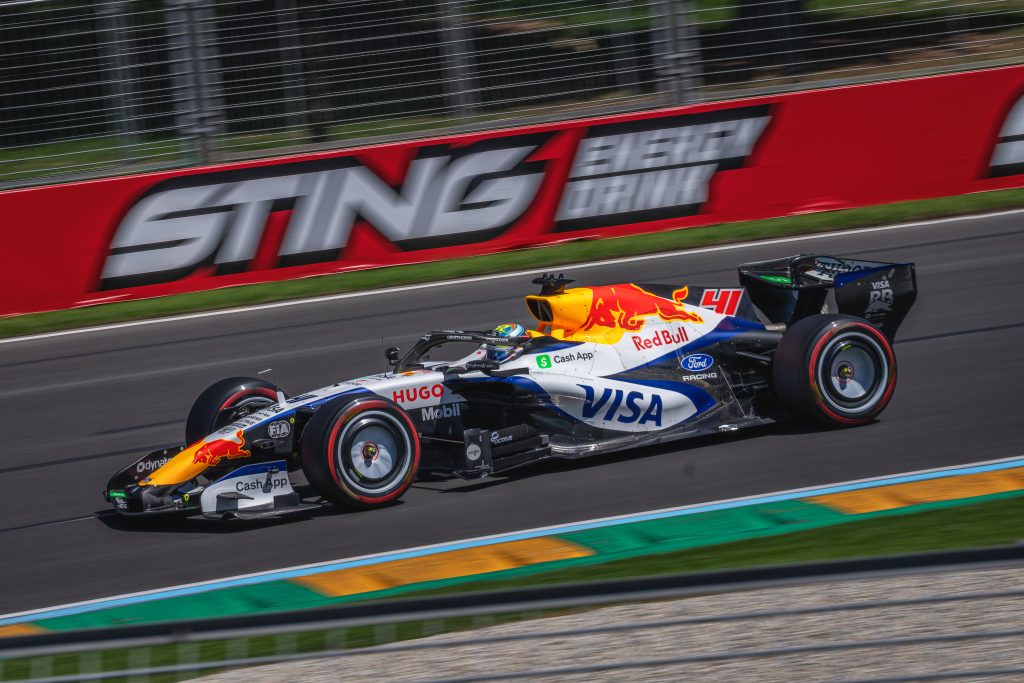
Overall, the new Engineers Australia Stand at the 2026 Australian Grand Prix was a surprisingly strong location for Formula 1 photography, especially from the highest rows.
The ability to shoot above the fencing is easily one of the biggest advantages of this stand, and the Turn 6–7 section creates much more dynamic compositions compared to many straight-line shooting locations around the circuit.
At the same time, the cornering motion makes panning photography more difficult than expected, and the afternoon backlighting can become frustrating during bright sunny sessions. The stand definitely rewards patience and technique more than simple point-and-shoot photography.
Even with those challenges, this was still one of my favourite shooting locations during the weekend, particularly for capturing more aggressive and dramatic racing images at Australian Grand Prix.